
GENERATIONAL ENTRY
What Years Are Baby Boomers? (1946–1964)
Baby Boomers are generally defined as people born between 1946 and 1964. The name is unusually literal: after World War II, birth rates rose sharply in the United States and several other countries.
In America alone, 3.4 million babies arrived in 1946. Over the next 19 years, there were roughly 76 million births.
This wasn't just a generation.
It was a demographic event.
Generation years: 1946–1964
ENTRY 02 - BABY BOOMERS
THERE WERE A LOT OF THEM.
That sounds obvious.
It explains an unreasonable amount.
When millions of children arrive within a relatively short period, the world has to make room for them. More classrooms. More houses. More teachers. More products. More entertainment.
And eventually, considerably more opinions about everything.
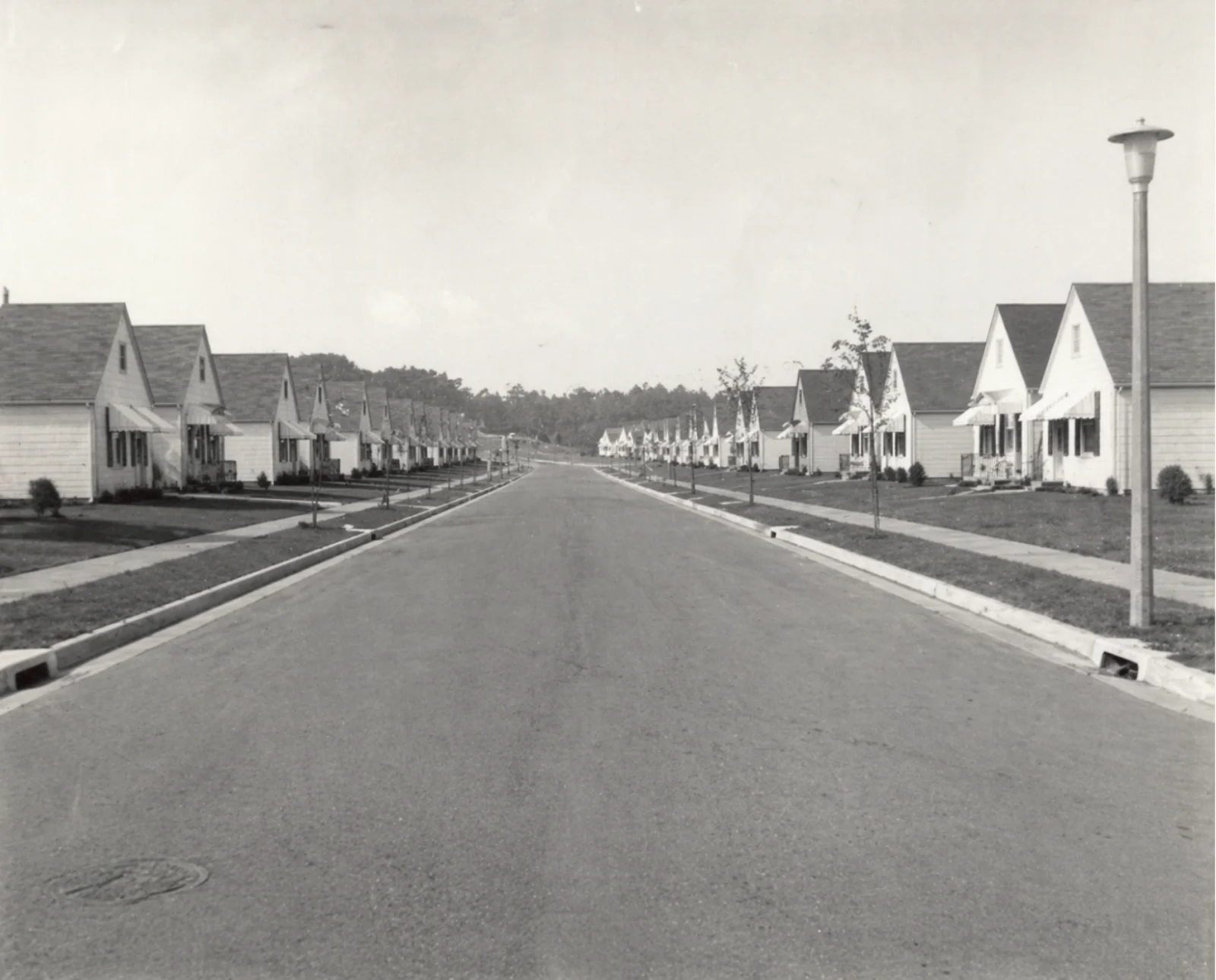
The postwar boom was particularly visible in the United States, where expanding suburbs, rising consumption and a growing middle class were already changing everyday life.
Boomers didn't simply grow up inside that expansion.
A surprising amount of the expansion grew around them.
Television is a good example.
Early Boomers were born when television was still a novelty. By the time they were teenagers, television had become a fixture of American family life.
That changed more than entertainment.
For the first time, millions of children in different cities could watch the same characters, hear the same songs and discover the same products at roughly the same time.
A generation of unusual size was meeting a communications system capable of reaching almost all of it.
Marketing departments noticed.
The larger world carried the same message: more was coming.
More houses. More cars. More appliances. More highways. More television. More consumer choice.
This picture was never as universal or as orderly as nostalgia later made it look. Segregation and discriminatory housing policies excluded many Black Americans from opportunities that helped build white suburban wealth. Cold War anxiety sat behind the optimism. And the apparently stable society of the 1950s contained conflicts that would become impossible to keep politely out of sight.
Nor was the American experience universal.
Europe was rebuilding under different conditions. Sweden had avoided much of the physical destruction of the war and entered its own postwar expansion, with rising living standards, urbanization and an increasingly developed welfare state.
The details differed.
The direction was familiar.
For a large part of the Western world, the generation born around and after the war was growing up while ordinary life became more prosperous, more modern and increasingly organized around mass consumption.
They inherited expansion as the normal condition.
Then they got old enough to question the people running it.
FIELD NOTE
CHILDHOOD BECAME A MASS MARKET
Children had obviously been sold things before.
What changed was the machinery.
Television could put the same character in millions of living rooms. A toy demonstrated on-screen could become desirable before a child had ever encountered one in real life.
Shows such as Howdy Doody demonstrated very early that children's attention could be turned into serious commercial demand. Advertisers learned that the television set wasn't merely furniture.
The scale became obvious remarkably early.
When Howdy Doody offered children campaign buttons in 1948, more than 60,000 requests came back - equivalent to roughly one-third of American homes that owned a television at the time.
Advertisers did not require further clarification.
The available commercial time sold out.
The children had been located.
It was access.
Soon toys, breakfast cereal, records, dolls, television characters and assorted objects nobody had required the previous Tuesday could move through childhood culture at national scale.
The important change wasn't any single product.
It was synchronization.
Millions of children could suddenly want the same thing at the same time.
That relationship between childhood, media and commerce would eventually become so ordinary that nobody thought much about it.
For Boomers, the machinery was being assembled around them.
Headquarters has reviewed the available evidence.
Marketing recovered quickly from the war.
System Glitch
THE GENERATION RAISED INSIDE THE SYSTEM BECAME ITS LOUDEST CRITIC
This is where the simple Boomer caricature stops being useful.
The same enormous generation raised amid postwar expansion came of age during civil rights struggles, Vietnam, the military draft, political assassinations, second-wave feminism and the counterculture.
The children who had been reached as a national audience discovered something interesting.
They could behave like one too.
Music travelled across borders. Television brought war and protest into living rooms. Youth culture became economically valuable, culturally visible and increasingly capable of arguing with the adults in charge.
Woodstock became the convenient photograph of the whole thing, although the overwhelming majority of Baby Boomers were obviously not standing in a muddy field in New York in 1969.
Most were elsewhere.
Presumably complaining about the traffic.
But the larger shift was real.
Youth was no longer merely the inconvenient period before becoming an adult. It had acquired its own music, language, markets, politics and cultural authority.
And this wasn't confined neatly to America. London, Paris, Prague, Stockholm and countless other places experienced their own versions of generational rebellion, new music, changing sexual norms and challenges to established authority.
Not one movement.
Not one politics.
Not one universal Boomer experience.
Something broader was happening.
The generation raised during expansion had become large and connected enough to see itself.
And once a generation can see itself, it can start making demands.
Boomers inherited institutions their parents had learned to value, benefited unevenly from decades of expanding prosperity, and then produced some of the most visible challenges to established authority in modern Western culture.
They didn't destroy the system.
They demonstrated that it could be argued with.
Then, gradually, they became the people running it.
HEADQUARTERS HAS NOTED THE IRONY.
NEXT GENERATIONAL ENTRY:
→ ENTRY 03 - GENERATION X
The birth rate fell.
The institutions remained.
The children arriving next would inherit something different:
The aftermath.