GENERATIONAL ENTRY
What Years Are the Silent Generation? (1928–1945)
The Silent Generation refers to those born between 1928 and 1945, shaped by economic pressure, global conflict, and systems that had to work the first time.
Age today: 80–98
Entry 01 - Silent Generation
Things were expected to work.
That was the baseline.
They didn’t spend much time explaining themselves. There wasn’t much use for it.
Things were built because they needed to be built. Bridges, factories, electrical systems - all expected to hold under pressure, because failure wasn’t theoretical. It had consequences, usually immediate and public.
There was very little distance between action and outcome. You did something, and reality responded without delay or interpretation.
If it worked, it stayed.
If it failed, it failed in public.
That tended to settle things.
The priority wasn’t being seen doing something. The priority was whether it worked when it mattered.
Nothing needed to feel right. It needed to hold.
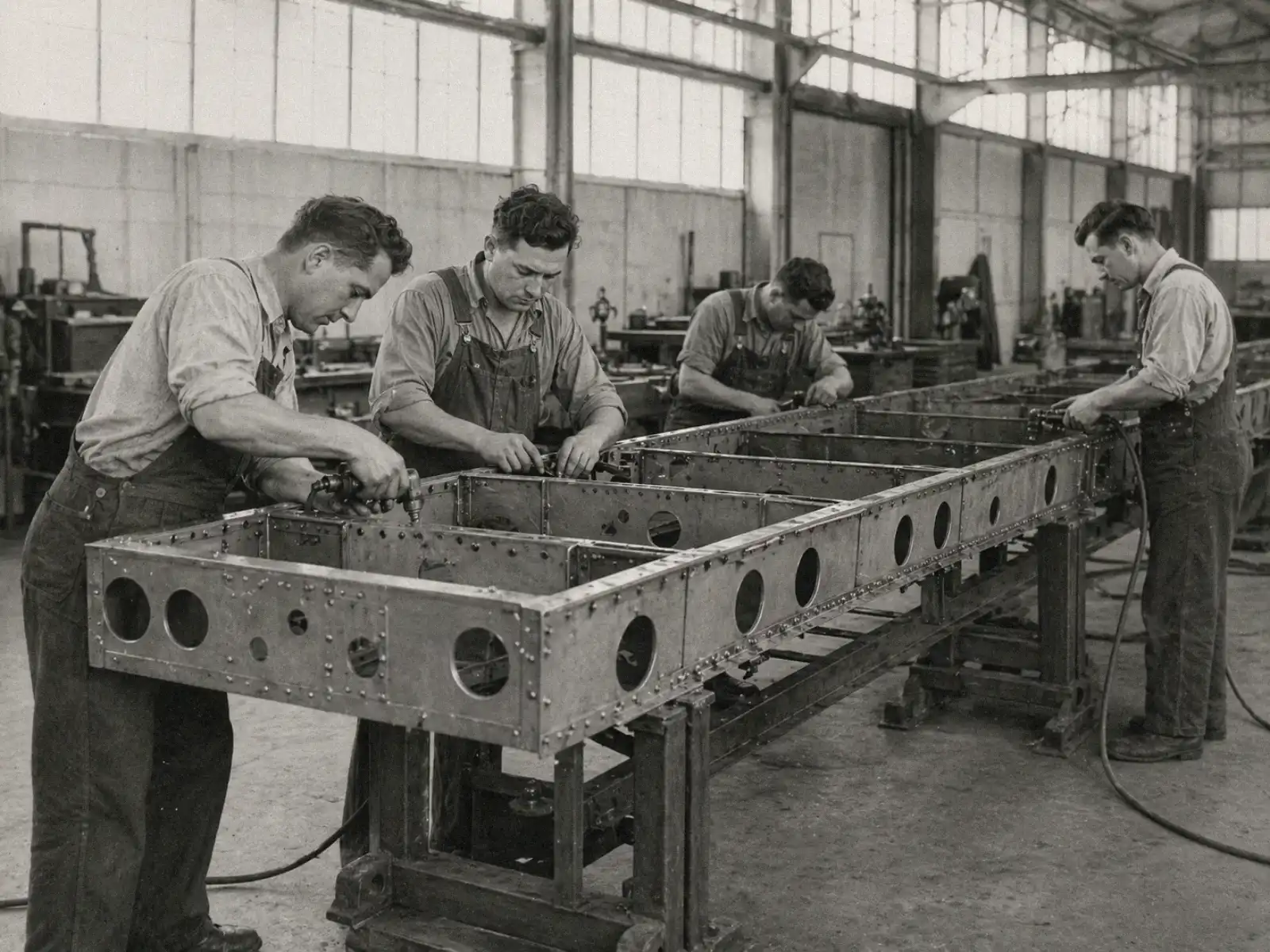
Field Note
A structure built under pressure does not require explanation. It requires proof.
Over time, that becomes the expectation. Not perfection - just reliability. Things should work. Not eventually. Not after discussion. When required.
That’s easy to underestimate now, where most things survive on explanation.
A system can fail repeatedly and still be defended, provided the language around it remains confident.
That was less common when output had to justify itself quickly.
There are structures from that period still in use. Not because they were optimized, but because they were built to carry more than necessary.
Failure wasn’t treated as a variable. It was treated as a result.
And the result spoke for itself.
System Glitch
Meaning was optional. Load-bearing was not.
That standard was passed forward without ceremony. Not as a philosophy, but as an assumption:
Durability over presentation.
Usefulness over interpretation.
It doesn’t stay intact.
It can’t.
Once something works long enough, attention shifts:
Building - Using - Expanding.
The further that expansion moves from the original pressure, the easier it becomes to confuse inherited strength with permanent stability.
That’s where it starts.
→ ENTRY 02 - BOOMERS
Expanded the structure. Assumed it would hold.