
GENERATIONAL ENTRY
What Years Are the Silent Generation? (1928–1945)
The Silent Generation generally refers to people born between 1928 and 1945, the range commonly used in American generational research.
They grew up through the Great Depression and World War II, then began reaching adulthood as the Korean War and Cold War reshaped American life.
The label itself is American too. In November 1951, TIME published a major portrait of America's younger generation. What struck its reporters wasn't that young people had nothing to say. It was how little public noise they seemed to make compared with generations around them.
The name already circulating for them was unusually effective:
The Silent Generation.
Generation years: 1928–1945
ENTRY 01 - SILENT GENERATION
THEY WEREN'T ACTUALLY THAT SILENT.
The name is slightly misleading.
They had opinions. They drank, dated, argued, listened to music their parents didn't understand and occasionally behaved exactly as young people have always behaved.
In fact, TIME's own 1951 reporting included enough drinking, partying, questionable judgment and spontaneous travel to suggest that “Silent” probably shouldn't be interpreted too literally.
What observers noticed was something else.
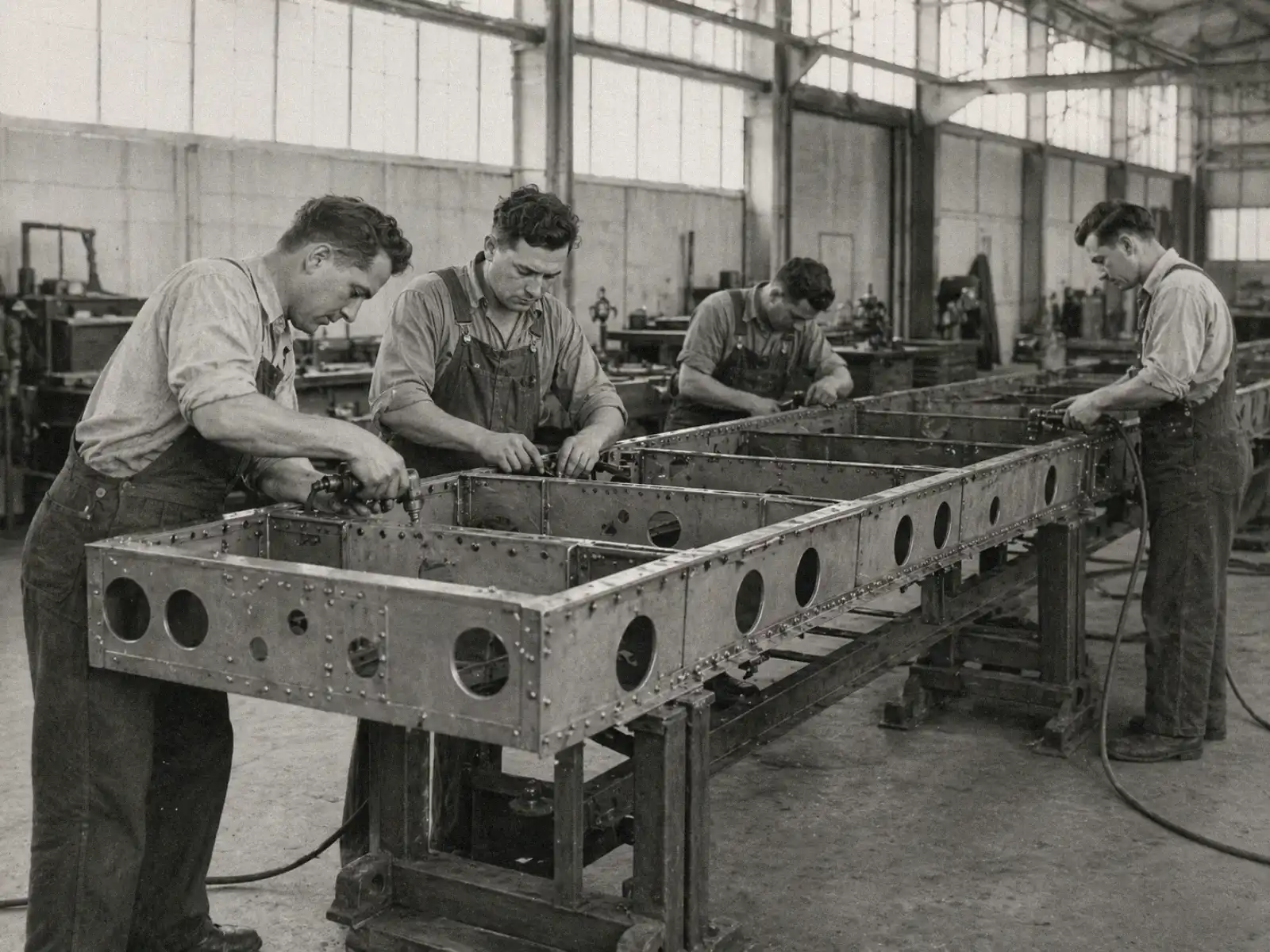
These were young Americans whose childhoods had overlapped economic depression and world war. They grew up while adults worried about money because there wasn't enough of it, followed a global war through radio and newspapers, watched fathers and older brothers leave for military service, and learned fairly early that events outside the house could rearrange life inside it.
By the time they reached adulthood, another war had started in Korea and the military draft could still interrupt whatever plans a young American man had made for himself.
It wasn't an especially good environment for grand declarations about finding yourself.
You got on with it.
That instinct wasn't uniquely American. Across Europe, including here in Sweden, the circumstances were different but the generation coming of age around the war years also knew what scarcity, uncertainty and rapid social change looked like.
That's one reason these American generational labels travelled surprisingly well. The history isn't identical.
Some of the recognition is.
And “Silent” certainly didn't mean passive.
The generation includes people who would become central to civil rights, rock and roll, modern comedy, film, literature and the enormous cultural changes that followed.
Culturally, they occupied an unusual position.
They could remember instability while watching prosperity and modern consumer life expand around them. They had experienced one kind of world and then lived long enough to watch another replace it.
They were standing with one foot in each.
That may explain more than the word “Silent” ever did.
FIELD NOTE:
THE NAME CAME FROM THE OUTSIDE
In November 1951, TIME asked what had happened to America's younger generation.
Its reporters found young adults worried about Korea, the draft, careers, marriage, money and an uncertain future. Compared with earlier youth movements, however, they appeared remarkably absent from political platforms, manifestos and public declarations.
TIME described their silence as the most startling thing about them.
But even the original article questioned what that silence actually meant. Were young people really passive - or were their elders simply looking for rebellion in the wrong places?
That question becomes more interesting with hindsight.
The Silent Generation would include people who helped transform music, film, comedy, literature and civil rights. Martin Luther King Jr., Clint Eastwood, Johnny Cash, James Dean and John Lennon were all born inside the commonly used 1928–1945 range.
One of them wasn't even American.
Apparently nobody informed him either.
HEADQUARTERS CONSIDERS THE NAME INCREASINGLY QUESTIONABLE.
Later evidence did little to help the classification.
When Pew Research Center asked members of the generation about their own generational identity, only 18% actually identified themselves as part of the Silent Generation.
Apparently even the Silent Generation wasn't particularly interested in being called the Silent Generation.
Headquarters considers this a fairly decisive review.
SYSTEM GLITCH:
STABILITY ARRIVED AFTER THEY LEARNED NOT TO EXPECT IT
The world many Americans entered as adults looked increasingly different from the one they remembered as children.
Postwar America expanded rapidly. Employment grew. Suburbs spread. Consumer goods filled homes. The G.I. Bill helped millions of veterans access education and housing, while U.S. home ownership climbed from roughly 44% in 1940 to 62% by 1960.
For someone who remembered Depression-era scarcity, wartime rationing or families doubling up because housing was unavailable, this probably didn't look like bland conformity.
It looked like things were finally working.
Not everyone shared equally in that prosperity. Racial discrimination and unequal access to housing and credit excluded many Black Americans and other minorities from opportunities that helped build postwar middle-class wealth.
And America wasn't the whole story.
Postwar Europe was rebuilding under very different conditions. Sweden had remained officially neutral during World War II and escaped much of the physical destruction experienced elsewhere in Europe, then entered its own period of economic expansion and development of the modern welfare state.
Different countries. Different circumstances.
But across much of the Western world, people who remembered instability were watching ordinary life become safer, richer and more predictable.
That's where the generational pattern becomes interesting. Children don't inherit their parents' memory of instability. They inherit the world their parents built in response to it.
The Silent Generation could look at growing stability and remember what came before. Their children would grow up inside that stability with much less reason to consider it unusual.
They would simply assume this was how the world worked.
Then those children arrived in unusually large numbers.
Headquarters has reviewed the demographic records.
There were a lot of them.
NEXT GENERATIONAL ENTRY:
→ ENTRY 02 - BABY BOOMERS (1946–1964)
Born into the expansion. Raised to expect it would continue.